Decades of Progress in U.S. Air Quality
Over the past fifty years, air quality in the United States has improved dramatically, largely due to the Clean Air Act and decades of regulation aimed at reducing pollution from industrial and transportation sources. Levels of PM2.5—tiny, health-damaging particles roughly thirty times smaller than the diameter of a human hair—have dropped significantly thanks to stricter emissions standards, cleaner fuels, and advanced pollution-control technologies. Between 2000 and 2022 alone, national PM2.5 levels decreased by approximately 42%, reflecting sustained progress in controlling soot, dust, and other particulate pollutants. These improvements have contributed to longer life expectancy, reduced rates of respiratory diseases, and overall public health benefits.
Wildfire Smoke Erodes Hard-Won Gains
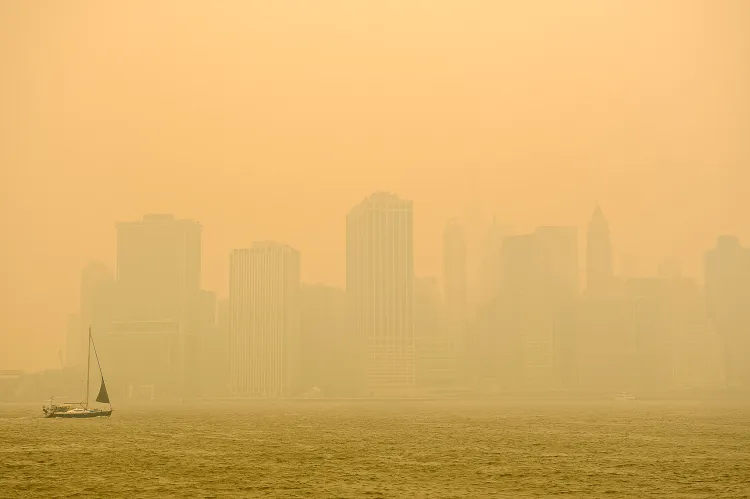
Despite decades of improvement, wildfire smoke fueled by climate change is increasingly undermining these gains. A new study published in Nature estimates that smoke from wildfires has erased roughly 25% of the air quality improvements achieved since 2000. Hotter, drier conditions caused by climate change reduce vegetation moisture, making forests, grasslands, and shrublands more susceptible to rapid and extensive burns. Decades of fire suppression policies have allowed fuel to accumulate in forests, intensifying the severity of fires. As a result, wildfires now burn much larger areas than they did fifty years ago, producing smoke that spreads far beyond the fire zones.
Western States Hit Hardest
The effects of wildfire smoke are particularly pronounced in Western states such as California, Washington, and Oregon. Smoke-laden days have become an annual reality, forcing schools to keep children indoors during recess and hospitals to prepare for respiratory emergencies. In these regions, wildfire smoke has effectively canceled out nearly half of the air quality improvements made over the past two decades. However, the problem is not confined to the West. Smoke plumes often travel hundreds or even thousands of miles, affecting air quality in the Midwest, South, and Eastern United States. This widespread impact shows that wildfire smoke is a national concern, not just a regional issue.
Health Implications of PM2.5 Exposure
PM2.5 particles from wildfire smoke penetrate deep into the lungs and can enter the bloodstream, triggering inflammation and worsening respiratory and cardiovascular conditions. Short-term exposure can exacerbate asthma, increase the risk of heart attacks, and contribute to neurological complications. Long-term or repeated exposure, especially during prolonged smoke events, may depress lung function for years. Vulnerable populations, including children, the elderly, and communities of color, are disproportionately affected. Black and Latino communities in urban areas, historically exposed to higher levels of pollution from vehicles and industry, face amplified health risks when wildfire smoke further degrades air quality.
Limits of the Clean Air Act
The Clean Air Act has been highly effective in regulating emissions from point sources, including coal-fired power plants, factories, and vehicles. However, it is less effective at addressing wildfire smoke, which drifts across state lines and affects populations far from the actual fires. Reducing human-caused emissions alone is not sufficient to mitigate the growing threat posed by wildfire smoke. This limitation underscores the need for additional strategies that address both climate change and land management to protect public health and maintain long-term air quality gains.
Forest Management and Climate Solutions
Experts stress that aggressive climate action is critical to limit temperature increases and reduce the severity of droughts, which exacerbate wildfire risks. Forest and fire management policies, including prescribed burns, can reduce fuel loads and prevent catastrophic fires. While prescribed fires produce localized smoke, they decrease the likelihood of larger, uncontrolled wildfires that generate massive smoke plumes. Proactive forest management, combined with monitoring, early-warning systems, and rapid emergency response, can help protect air quality while preserving the natural ecological role of fire.
Protecting Public Health
Individuals can also reduce exposure during smoke events. Installing high-efficiency air filters at home, wearing N95 or KN95 masks outdoors, and avoiding strenuous outdoor activity when air quality is poor are practical measures. Public awareness campaigns, real-time air quality monitoring, and community preparedness plans further assist in mitigating the health impacts of wildfire smoke. These interventions are particularly important in regions experiencing frequent or prolonged smoke events, ensuring that vulnerable populations receive timely guidance to reduce risks.
A Coordinated Approach for Cleaner Air
The rise in wildfire smoke represents a significant reversal of decades of progress in U.S. air quality. Addressing this challenge requires coordinated solutions that integrate climate policy, forest management, public health measures, and individual protective actions. Only through such an integrated approach can the long-term benefits of cleaner air be sustained across all communities. Efforts must balance reducing conventional pollutants with preparing for the unpredictable and far-reaching impacts of wildfire smoke. By doing so, the U.S. can maintain cleaner air for future generations and prevent wildfire smoke from erasing decades of public health progress.