Introduction
Moringa oleifera, often referred to as the “miracle tree,” is native to India, Pakistan, Bangladesh, and Afghanistan but is now widely cultivated across tropical and subtropical regions including Africa, Southeast Asia, and Latin America. For centuries, moringa has been used in Ayurvedic and folk medicine to treat ailments ranging from hypertension and ulcers to infections and joint pain. Modern research has begun to validate many of these traditional claims, highlighting moringa’s rich nutrient profile, antioxidant properties, and bioactive compounds that target immunity, inflammation, and metabolism.
Nutritional and Bioactive Profile
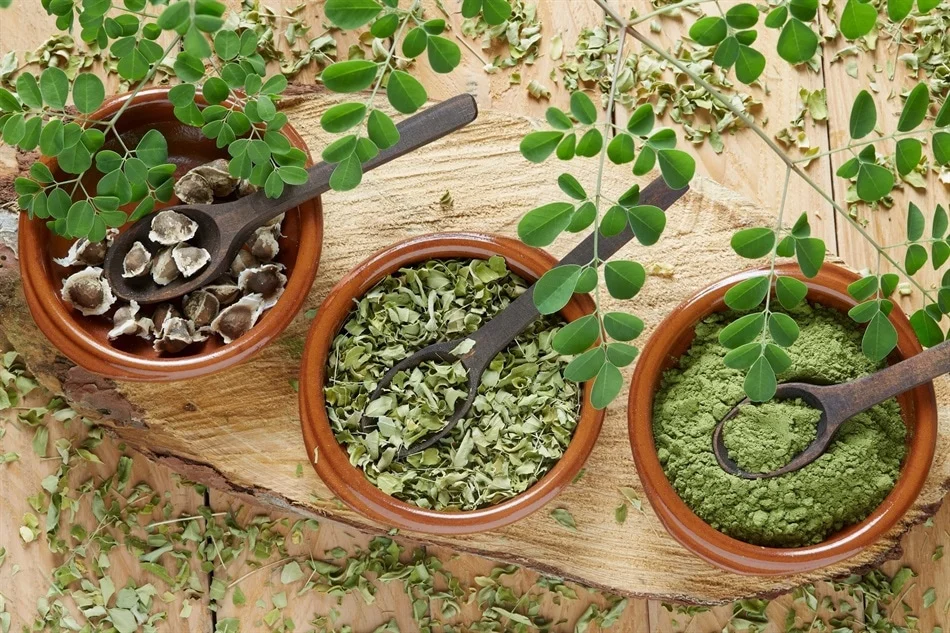
Nearly every part of the moringa tree can be used, but the leaves are especially nutrient-dense. They are packed with vitamins A, C, and E, calcium, potassium, and protein, making moringa a valuable dietary supplement in regions facing malnutrition. Beyond basic nutrition, moringa contains an impressive range of bioactive compounds including flavonoids such as quercetin and kaempferol, carotenoids, phenolic acids like chlorogenic acid, and glucosinolates.
These phytochemicals provide antioxidant protection by neutralizing reactive oxygen species (ROS), reducing oxidative stress, and supporting endogenous antioxidant enzymes such as superoxide dismutase and catalase. Other compounds, including tannins and saponins, have been linked to anticancer, hepatoprotective, and cardioprotective effects, showing the plant’s multifaceted therapeutic potential.
Immune Support
One of moringa’s most studied benefits is its ability to support the immune system. Laboratory studies have shown that moringa extracts can downregulate pro-inflammatory signaling in immune cells, reducing the production of cytokines such as TNF-α, IL-6, and IL-1β. The combined antioxidant and immunomodulatory effects create a stronger, more balanced immune response.
Although large-scale human studies are still limited, early evidence suggests that moringa supplementation may improve resilience against infections and chronic inflammation. This has made it a popular natural health supplement in wellness communities, particularly for people looking to strengthen their immune system without synthetic drugs.
Anti-Inflammatory Effects
Chronic inflammation is a major contributor to diseases such as arthritis, inflammatory bowel disease, and cardiovascular problems. Moringa’s anti-inflammatory activity is largely attributed to isothiocyanates, flavonoids, and phenolic acids that block inflammatory signaling pathways like NF-κB and COX-2.
Animal studies have demonstrated moringa’s ability to reduce swelling, improve gut barrier function, and even shift microbiota composition toward healthier patterns. In arthritis models, moringa reduced joint inflammation and cytokine levels, suggesting a possible complementary role in inflammatory disease management. While more clinical trials are needed, preclinical data consistently highlight moringa’s potential as a natural anti-inflammatory therapy.
Metabolic and Cardiovascular Health
Moringa also plays a promising role in managing metabolic disorders. Leaf extracts rich in quercetin, kaempferol, and chlorogenic acid help regulate glucose metabolism by reducing carbohydrate absorption and improving insulin sensitivity. Activation of AMPK and GLUT4 pathways further enhances glucose uptake, supporting better blood sugar control.
In addition, moringa has demonstrated hypolipidemic properties. By limiting cholesterol micelle formation and activating lipid-regulating pathways, moringa reduces triglycerides and supports healthy cholesterol levels. Animal studies on metabolic syndrome have shown improved glucose tolerance, lower abdominal fat, and healthier lipid profiles. Some research also points to moringa’s ability to influence the gut microbiome, contributing to improved metabolic outcomes.
Safety and Dosage Considerations
Safety studies generally suggest that moringa is well tolerated at modest dietary doses, though very high concentrations may cause mild gastrointestinal discomfort or lab abnormalities. Because moringa can lower blood sugar and blood pressure, people taking antidiabetic or antihypertensive medication should monitor levels carefully to avoid additive effects.
Most human trials have used leaf powders or extracts in moderate amounts, but there is no universally established safe upper limit. For this reason, supplementation should be approached with caution and ideally under professional guidance.
Future Directions in Research
Although moringa shows strong potential across immunity, inflammation, and metabolic health, research remains limited by small human trials and variability in preparation methods. To translate findings into clinical recommendations, standardized extracts, larger randomized controlled trials, and long-term safety assessments are required.
Researchers are particularly interested in moringa’s role as an adjunct therapy for chronic diseases, its potential in functional foods, and its integration into sustainable nutrition strategies in low-resource settings. With its unique combination of nutrients and bioactive compounds, moringa is well positioned to become both a health supplement and a food security solution.
Conclusion
Moringa oleifera has earned its reputation as the “miracle tree” due to its nutrient density, antioxidant activity, and therapeutic potential. From supporting immunity and reducing inflammation to improving glucose and lipid metabolism, moringa offers wide-ranging health benefits. While more rigorous clinical evidence is needed, current research highlights its promise as both a dietary supplement and a natural therapy for chronic disease prevention and management. As global interest grows, moringa may play an increasingly important role in nutrition, wellness, and integrative medicine.